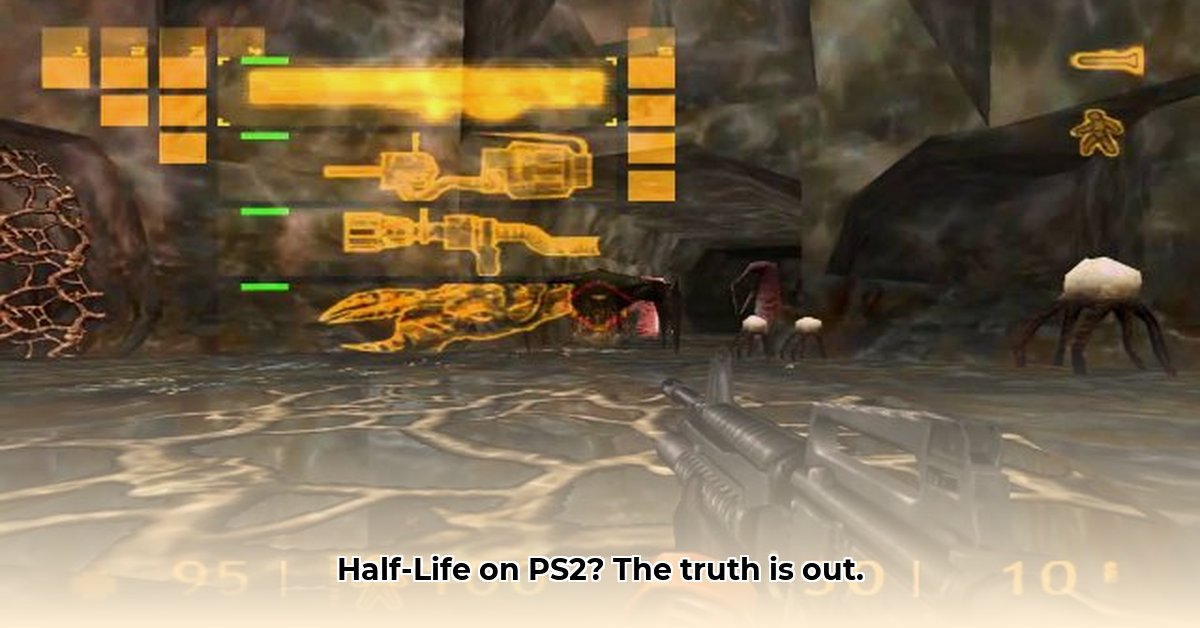
Half-Life PS2 ROMs: Unraveling the Mystery
The persistent rumors surrounding a PlayStation 2 version of Half-Life have captivated gamers for years. Are these whispers of a mythical port simply digital folklore, or is there a kernel of truth hidden within the depths of the internet? This investigative piece delves into the evidence, examining the technical feasibility, analyzing purported ROM files, and exploring the legal implications of such a release. We will separate fact from fiction, comparing the claims to the realities of PS2 hardware capabilities and debunking long-standing myths.
The Legend of Half-Life on PS2: Fact or Fiction?
Numerous websites claim to offer downloadable Half-Life PS2 ROMs. However, online availability doesn't automatically equate to authenticity. These could be elaborate hoaxes, cleverly disguised fakes, or perhaps, modified versions of existing games. The widespread belief in this elusive title suggests a powerful narrative, yet the complete absence of any official acknowledgment from Valve, Half-Life's creators, casts significant doubt. This lack of official confirmation raises crucial questions: Where's the definitive proof? Where's the concrete evidence?
The Technological Tightrope: Could It Even Exist?
The PlayStation 2, while technologically impressive for its time, possessed significantly less processing power and memory compared to the PCs Half-Life was originally designed for. Could a faithful recreation of the game's intricate graphics and physics engine truly be feasible on the PS2's limited hardware? Any port would almost certainly require significant compromises, resulting in a drastically altered gameplay experience compared to the original. Even a minimal port would likely showcase considerable visual and performance shortcomings.
Investigating the Evidence: A Digital Forensics Approach
To determine authenticity, we require rigorous evidence, not mere speculation. Let's systematically examine the characteristics of these purported Half-Life PS2 ROM files.
Step 1: File Size Analysis: A crucial initial step involves comparing the file size of the alleged ROMs to established PS2 games. A substantial discrepancy would indicate potential incompleteness, extensive modification, or a complete fabrication. The difference would be comparable to mistaking a thumbnail for a high-resolution image.
Step 2: Code Analysis: A more detailed investigation requires advanced reverse engineering techniques; analyzing the game's code itself. This would reveal information about the tools used to create the ROM, potentially differentiating authentic ports from fan-made projects or hoaxes. This process is akin to digital archaeology, painstakingly reconstructing the ROM's origins.
Step 3: Visual Comparison: A visual inspection of screenshots and gameplay footage from the purported PS2 ROM should be compared to the original PC version. Do the graphics align with the PS2's capabilities? Significant incongruities would strongly suggest manipulation or outright fabrication. A legitimate port would exhibit limitations, but not impossibilities.
The Verdict: Separating Fact from Speculation
The absence of any official announcement from Valve, coupled with the technological constraints of the PS2, strongly suggests that a genuine, officially released Half-Life port for the PS2 never existed. The ROMs circulating online are most likely unauthorized fan projects, modified versions of other games, or elaborate hoaxes. These files, however, highlight the enduring popularity of Half-Life and the creativity of its dedicated fanbase. However, the claim of an "official" release remains extremely doubtful.
The Ongoing Investigation: A Mystery That Continues
This investigative process is not conclusive. Further, more detailed technical analysis could potentially reveal more evidence. The truth concerning these Half-Life PS2 ROMs remains a compelling mystery, a fascinating intersection of gaming history, community creativity, and the challenges of digital preservation. Future discoveries may alter our understanding, but currently, the evidence leans heavily toward the absence of an official release.
Risk Assessment: Navigating the Uncertainties
| Factor | Risk Level | Likelihood | Impact | Mitigation |
|---|---|---|---|---|
| Copyright Infringement | High | Medium | Legal repercussions | Avoid distribution, focus on analysis only |
| Misinformation/Misattribution | High | High | Loss of credibility | Thorough source verification |
| Technical Analysis Challenges | Medium | Low | Inaccurate conclusions | Peer review, multiple analytical approaches |
The investigation into Half-Life PS2 ROMs underlines the difficulty of verifying digital artifacts, showcasing the complex interplay between fan creativity and gaming history. The mystery persists, even as new evidence might simply reinforce the improbability of an official release.
How to Verify Authenticity of Half-Life PS2 ROMs
Key Takeaways:
- An officially released Half-Life PlayStation 2 port lacks confirmation. Online presence doesn't validate official release.
- Verification is nearly impossible without access to internal development materials or original retail copies.
- Analyzing file sizes and code offers clues, but definitive verification remains elusive.
- Emulation aids accessibility, but not authentication.
The Elusive Half-Life PS2 Port: A Continuing Mystery
The question of a legitimate Half-Life PS2 release continues to intrigue retro gaming communities. While numerous ROMs circulate, claiming to be the elusive PS2 version, verifying authenticity poses a significant challenge. Let's analyze the known (or suspected) facts.
The lack of official documentation presents the largest obstacle. Valve has never publicly acknowledged a PS2 port. This silence, coupled with the absence of contemporary reviews, fuels speculation. Is this a lost piece of history, or an intricate hoax?
The Digital Detective Work: Challenges in Verification
How can one verify the authenticity of these ROMs? File analysis is a common approach; comparing file sizes and checksums against known PC versions can reveal discrepancies. However, skilled forgeries can mimic these characteristics, rendering this method insufficient.
More in-depth code analysis may reveal the ROM's origins. However, this requires specialized skills and software which are not readily available for the general public. Expert level reverse engineering would be needed to make any accurate conclusions. Even then, distinguishing between an authentic port and a sophisticated fan-made modification is an extremely difficult task.
The Role of Emulation
While emulation plays a crucial role in accessing these ROMs by mimicking the PS2's hardware, it doesn't address the issue of authenticity. Ultimately, emulation simply allows the ROM to run, not prove its legitimacy.
The Verdict: Uncertainty Remains
The mystery of the Half-Life PS2 ROM endures. While some claim to have a functional version, conclusive proof remains lacking. The technical hurdles and the absence of official information make conclusive verification exceptionally challenging. Unless compelling evidence emerges, such as official documentation or a re-released version, the truth regarding an official Half-Life PS2 port will likely remain shrouded in uncertainty.
